
The Ultimate Tax Attorney FAQ
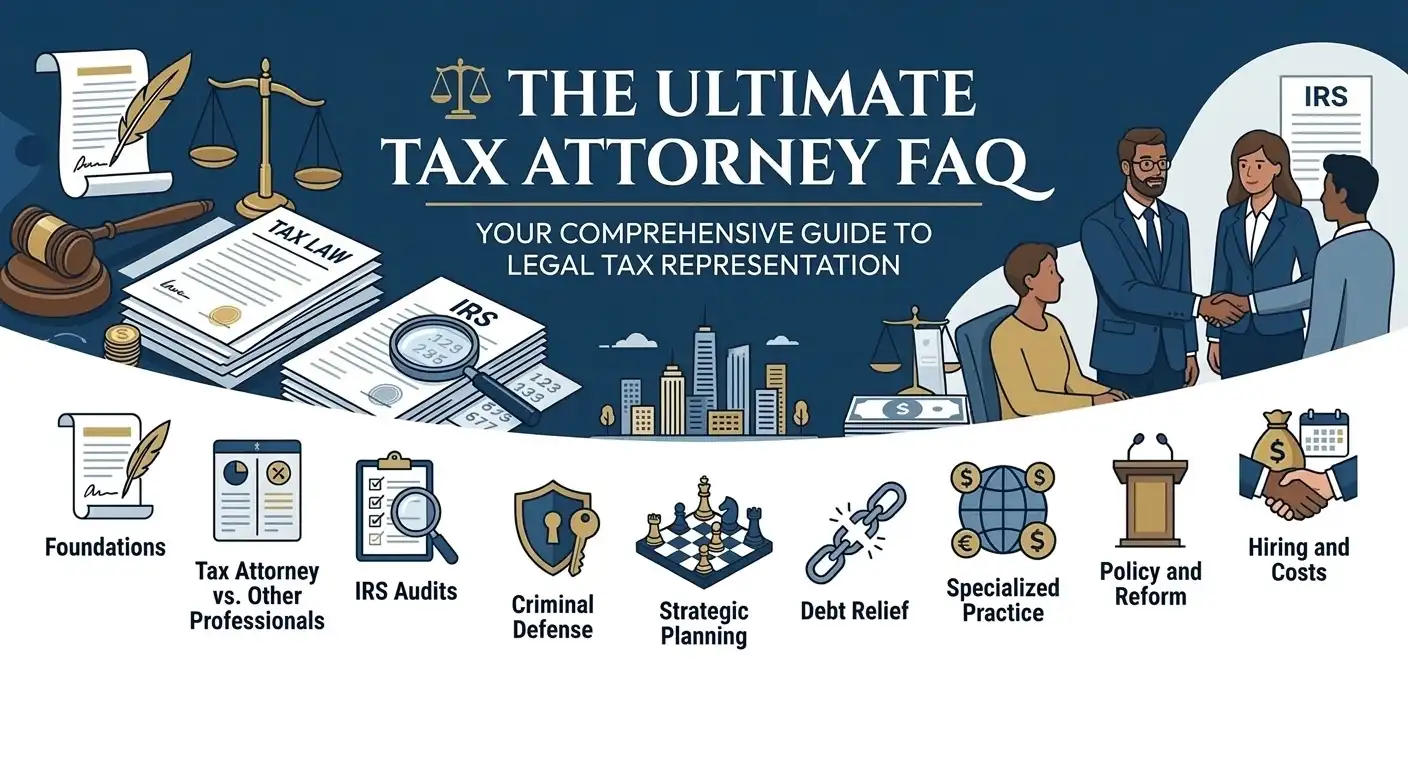
I. Foundations: The Role of a Tax Attorney
What does a tax attorney do?
A tax attorney is a lawyer who specializes in tax law and helps individuals and businesses handle complex tax issues. They represent clients before the Internal Revenue Service (IRS), resolve tax debts, prepare complex returns, and provide legal protection in audits or disputes.
What qualifications should a tax attorney have?
A tax attorney should have a Juris Doctor (JD) degree, pass the bar exam in their practicing state, and often have additional qualifications.
What is the attorney-client privilege in tax law?
Attorney-client privilege in tax law is a legal principle that protects communications between a client and their attorney from disclosure to third parties, ensuring the confidentiality of legal advice on tax matters.
What are the ethical obligations of a tax attorney?
Tax attorneys have ethical obligations to maintain client confidentiality, provide competent representation, avoid conflicts of interest, and adhere to legal and professional standards, including honesty and integrity in all dealings.
What is the role of a tax attorney in tax law education?
A tax attorney in tax law education typically serves as an educator, providing instruction on complex tax laws and regulations, and as a mentor, guiding students through practical applications of tax law in real-world scenarios.
II. Tax Attorney vs. Other Professionals
What is the difference between a tax attorney and a CPA?
A tax attorney specializes in the legal aspects of tax law, including representing clients in disputes with tax authorities, providing legal advice on tax related matters, but can also prepare returns, perform audits, incorporate businesses. While a CPA (Certified Public Accountant) focuses on financial record-keeping, tax preparation, and financial planning, often providing accounting services.
What is the difference between a tax attorney and an enrolled agent?
A tax attorney is a legal professional who specializes in interpreting and applying tax laws, often representing clients in disputes with tax authorities, while an enrolled agent is a tax advisor who is federally authorized to represent taxpayers before the IRS, focusing primarily on tax preparation and compliance.
What is the difference between a tax attorney and a tax preparer?
A tax attorney specializes in tax-related legal issues, such as tax disputes, litigation, and legal advice, while a tax preparer focuses on preparing and filing tax returns for individuals and businesses.
What is the difference between a tax attorney and a financial advisor?
A tax attorney specializes in legal issues related to tax law, including tax disputes and litigation, while a financial advisor provides guidance on financial planning, investments, and managing personal finances.
III. IRS Audits, Disputes, and Litigation
How can a tax attorney help with IRS audits?
A tax attorney can help with IRS audits by providing legal representation, negotiating settlements, ensuring compliance with tax laws, and protecting the taxpayer's rights throughout the audit process.
Can a tax attorney negotiate with the IRS on my behalf?
Yes, a tax attorney can negotiate with the IRS on your behalf, helping to resolve issues such as tax debts, audits, and settlements.
Can a tax attorney represent me in tax court?
Yes, a tax attorney can represent you in tax court as they are licensed to practice law and have the expertise to handle tax-related legal issues.
What is the role of a tax attorney in tax dispute resolution?
A tax attorney plays a crucial role in tax dispute resolution by representing clients in negotiations with tax authorities, providing legal advice on tax laws, and preparing necessary documentation for audits, appeals, or litigation.
How can a tax attorney help with tax liens and levies?
Yes, a tax attorney can help with tax liens and levies by negotiating with the IRS, representing clients in court, and providing legal advice on resolving tax debts.
IV. Criminal Defense and Serious Issues
Can a tax attorney help with tax evasion charges?
Yes, a tax attorney can help with tax evasion charges by providing legal representation, negotiating with tax authorities, and developing defense strategies to potentially reduce penalties or avoid criminal charges.
How can a tax attorney assist with tax fraud investigations?
A tax attorney can assist with tax fraud investigations by providing legal representation, advising on rights and obligations, negotiating with tax authorities, and developing defense strategies to mitigate potential penalties.
Can a tax attorney help with tax identity theft?
Yes, a tax attorney can help with tax identity theft by assisting in resolving issues with the IRS, advising on legal rights, and helping to implement measures to prevent future occurrences.
How can a tax attorney help with tax shelters?
A tax attorney can help with tax shelters by providing legal advice on the legitimacy and compliance of tax shelter strategies, ensuring they meet IRS regulations, and representing clients in disputes or audits related to these shelters.
V. Strategic Planning and Compliance
What is the role of a tax attorney in tax compliance?
A tax attorney plays a crucial role in tax compliance by advising clients on tax laws, representing them in disputes with tax authorities, and ensuring accurate and timely tax filings to avoid penalties.
What is the role of a tax attorney in tax compliance audits?
A tax attorney plays a crucial role in tax compliance audits by providing legal representation, ensuring that the taxpayer's rights are protected, advising on legal strategies, and negotiating with tax authorities to resolve disputes or minimize penalties.
What is the role of a tax attorney in business tax planning?
A tax attorney plays a crucial role in business tax planning by providing legal advice on tax-related matters, ensuring compliance with tax laws, representing the business in disputes with tax authorities, and helping to structure transactions in a tax-efficient manner.
What is the role of a tax attorney in corporate tax planning?
A tax attorney in corporate tax planning advises businesses on tax strategies to minimize liabilities, ensures compliance with tax laws, represents the company in disputes with tax authorities, and assists in structuring transactions to achieve tax efficiency.
How can a tax attorney assist with estate planning?
A tax attorney can assist with estate planning by providing legal advice on minimizing estate taxes, ensuring compliance with tax laws, and structuring estate plans to protect assets and facilitate a smooth transfer to beneficiaries.
How can a tax attorney help with tax planning for retirement?
A tax attorney can help with tax planning for retirement by advising on tax-efficient investment strategies, ensuring compliance with tax laws, and helping to minimize tax liabilities through the use of retirement accounts and other tax-advantaged vehicles.
VI. Debt Relief and Penalties
Can a tax attorney help with tax debt relief?
Yes, a tax attorney can help with tax debt relief by negotiating with the IRS on your behalf, setting up payment plans, and advising on legal options such as offers in compromise or bankruptcy.
Can a tax attorney help with filing back taxes?
Yes, a tax attorney can assist with filing back taxes by providing legal advice, negotiating with the IRS, and resolving tax disputes or penalties.
Can a tax attorney help with tax return amendments?
Yes, a tax attorney can assist with tax return amendments by providing legal advice, ensuring compliance with tax laws, and representing clients in disputes with the IRS.
How can a tax attorney help with tax penalties?
A tax attorney can help with tax penalties by negotiating with the IRS for penalty abatement, representing clients in tax court, and advising on legal strategies to minimize or eliminate penalties through compliance and settlement options.
VII. Specialized Practice Areas
Can a tax attorney help with international tax issues?
Yes, a tax attorney can help with international tax issues by providing expertise in navigating complex tax laws, ensuring compliance with international regulations, and advising on tax planning strategies to minimize liabilities.
How can a tax attorney help with offshore accounts?
A tax attorney can help with offshore accounts by ensuring compliance with international tax laws, advising on legal tax minimization strategies, and representing clients in disputes with tax authorities.
Can a tax attorney help with state and local tax issues?
Yes, a tax attorney can help with state and local tax issues by providing legal advice, representing clients in disputes, and assisting with compliance and planning strategies.
Can a tax attorney help with payroll tax issues?
Yes, a tax attorney can help with payroll tax issues by providing legal advice, negotiating with the IRS, and representing businesses in disputes or audits related to payroll taxes.
How can a tax attorney help with cryptocurrency tax issues?
A tax attorney can help with cryptocurrency tax issues by providing guidance on compliance with IRS regulations, assisting in the reporting of cryptocurrency transactions, and representing clients in audits or disputes with tax authorities.
How can a tax attorney help with tax deductions and credits?
A tax attorney can help with tax deductions and credits by providing expert advice on eligibility, ensuring compliance with tax laws, and representing clients in disputes with tax authorities to maximize potential savings.
What is the role of a tax attorney in nonprofit organizations?
A tax attorney in nonprofit organizations primarily ensures compliance with tax laws, assists in obtaining and maintaining tax-exempt status, advises on charitable giving, and represents the organization in tax disputes or audits.
What is the role of a tax attorney in mergers and acquisitions?
A tax attorney in mergers and acquisitions provides legal advice on tax implications, ensures compliance with tax laws, structures transactions to optimize tax outcomes, and represents clients in negotiations and disputes with tax authorities.
VIII. Policy, Hiring, and Costs
What is the role of a tax attorney in tax policy advocacy?
A tax attorney in tax policy advocacy plays a crucial role in analyzing, interpreting, and influencing tax legislation and regulations, often working with lawmakers, government agencies, and organizations to shape tax policies that align with specific interests or public needs.
What is the role of a tax attorney in tax reform?
A tax attorney plays a crucial role in tax reform by advising clients on compliance with new tax laws, representing them in disputes with tax authorities, and helping to shape policy through advocacy and consultation with lawmakers.
What is the role of a tax attorney in tax treaty negotiations?
A tax attorney in tax treaty negotiations provides legal expertise on international tax laws, advises on compliance with existing treaties, and helps draft treaty provisions that align with domestic laws and international standards.
When should I hire a tax attorney?
You should hire a tax attorney when facing complex tax issues such as audits, tax fraud investigations, or disputes with the IRS, or when you need legal representation in court or advice on tax planning and compliance.
How much does a tax attorney cost?
The cost of hiring a tax attorney can vary widely, typically ranging from $200 to $1,000 per hour, depending on the attorney's experience, location, and the complexity of the case.
How do I find a reputable tax attorney?
To find a reputable tax attorney, seek recommendations from trusted professionals such as accountants or financial advisors, check credentials and reviews on legal directories like Avvo or Martindale-Hubbell, and ensure they have experience in tax law and a good track record with cases similar to yours.
What questions should I ask a tax attorney before hiring?
Before hiring a tax attorney, ask about their experience with cases similar to yours, their fee structure, their approach to handling your specific tax issues, and their communication style and availability.
What is the process of hiring a tax attorney?
The process of hiring a tax attorney involves identifying your specific tax needs, researching potential attorneys with expertise in tax law, checking their credentials and experience, scheduling consultations to discuss your case, and finally, selecting an attorney based on their expertise, communication skills, and fee structure.