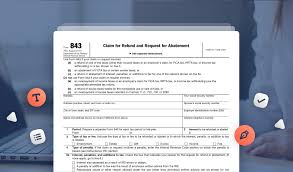
Staring at an IRS penalty notice feels a bit like getting a speeding ticket in the mail three months after the fact, frustrating, expensive, and sometimes confusing. But unlike a traffic cam, the IRS actually has a "pardon" button. It’s called Form 843, Claim for Refund and Request for Abatement.
If you’re ready to stop the bleeding and ask the IRS to waive those failure-to-file or failure-to-pay penalties, here is exactly how to fill out the paperwork.
Before You Start: The "Big Three" Requirements
You shouldn't fire off a Form 843 blindly. To have a real shot at success, ensure you meet these criteria:
- Compliance: You must have filed all required tax returns.
- The "Why": You need a specific reason (First-Time Abatement or Reasonable Cause).
- The Proof: Gather your doctor’s notes, fire reports, or death certificates before you pick up the pen.
Step-by-Step Instructions for Form 843
1. Header Information (The Basics)
Fill out your name, SSN/ITIN, and current address.
- Pro Tip: If you filed a joint return for the year in question, make sure both names and SSNs are listed exactly as they appeared on that specific return.
2. Sections 1 & 2: Dates and Amounts
- Line 1: Enter the tax period (e.g., 01/01/2023 to 12/31/2023).
- Line 2: Enter the specific amount of the penalty you are asking to have removed. You can find this on the most recent notice the IRS sent you.
3. Section 3: Type of Tax
Most individual taxpayers will check "Income" or "Employment." If you are a business owner dealing with payroll penalties, ensuring this box is correct is vital for the IRS to route your request to the right department.
4. Section 5: The "Reason" for the Request
This is where many people trip up. You must check the box that best describes your situation. Usually, for penalty removal, you will check:
- "Reasonable Cause" (for illness, disasters, etc.)
- "Other" (if you are requesting a First-Time Abatement).
5. Section 7: The Explanation (The Most Important Part)
This is the "narrative" section. The IRS gives you a small box, but you can (and should) attach a separate sheet of paper if needed.
Your explanation should follow this structure:
- The Event: "On [Date], my business was flooded/I was hospitalized."
- The Impact: "This prevented me from accessing my records/filing on time because..."
- The Resolution: "As soon as I was able, I filed the return on [Date] to show good faith."
Note: If you are applying for First-Time Abatements (FTA), simply state: "I am requesting an administrative waiver under the First-Time Abatement policy for the tax year [Year] as I have had no penalties in the prior three years."
Common Mistakes to Avoid
- Using the wrong form: Don't use Form 843 to dispute the amount of tax you owe—only the penalties and interest associated with it. To dispute the tax itself, you usually need an amended return (1040-X).
- Vague excuses: Saying "I forgot" or "I was busy" will result in an immediate "No."
- Missing signatures: If it’s a joint return, both spouses must sign.
Where to Mail Form 843
The mailing address depends on where you live and which type of tax you are disputing. Always check the Instructions for Form 843 on the official IRS website for the most current "Where to File" addresses, as they change frequently.
Need a Second Pair of Eyes?
Writing a narrative that the IRS won't reject is an art form. If you're dealing with a large penalty, it’s often safer to have a professional handle the communication.